Imagine narrow streets, old facades, green trees, endless vineyards, colorful meadows, bright sunshine, and natural springs. This is Vipava, the place where I grew up, playing under the trees and on the farm. In the countryside, we have everything we need, and people are exceptionally creative—even artistically inspired by their surroundings. Yet we had little access to theatres, opera, or classical concerts.
At the beginning of July, I had the opportunity to get to know the exceptionally warm, musical, and talented musicians of the Bavarian Radio Symphony Orchestra (BRSO), as well as a conductor I had admired for years through videos and recordings—Sir Simon Rattle.
I found someone completely down-to-earth: smiling, kind, encouraging, and sincere. Despite his decades-long career, he showed a genuine interest in me—in how I see, experience, and interpret musical scores—and even expressed a desire to stay in touch and continue talking about music. I will always cherish this encounter, and I hope to have the opportunity to visit the maestro in Munich and continue learning from him.
Just two days later, I was already in Estonia, attending a masterclass at the Pärnu Music Festival. There I first met Leonid Grin, the 79-year-old maestro who studied with Leonard Bernstein. Even before we young conductors from all over the world raised our batons, he shared wisdom that will stay with me forever. One sentence, in particular, belongs on every young conductor’s music stand: “Conduct to express, not to impress.”
Paavo Järvi, whom we know as one of the leading conductors of our time, guided us with a watchful eye and proved to be an outstanding teacher. The things he said to me personally only confirmed what my dear mentor, Eduardo Portal, has always told me.
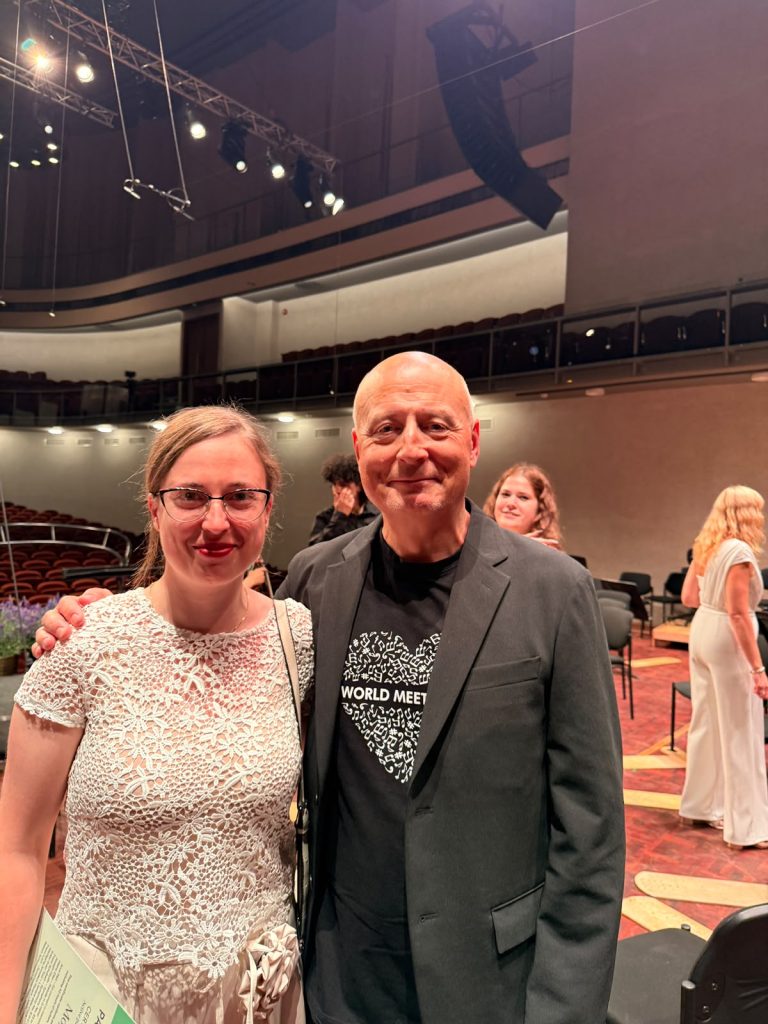
Mojca with Paavo Järvi
Watching Paavo conduct the Estonian Festival Orchestra was deeply inspiring. The concerts were vibrant, expressive, and full of emotion. I would call this the “orchestra of friends,” as it consists of musicians whom the maestro personally invites to participate. Such an invitation is a sign of respect, recognition, and affection. I had known Paavo Järvi from concerts in Switzerland, but here I rediscovered him. He seemed much more relaxed and completely immersed in the music.
The orchestra played superbly. A vast palette of colours, a wide dynamic range, flexible agogics… I could praise them endlessly. My thoughts returned to my previous post, where I reflected on how difficult it is to connect with an orchestra when you spend only a few days with the musicians. In truth, personal relationships do affect performances, especially when we remember that musical expression is deeply intimate—and we can only be intimate when there is trust.
When the hall began to buzz, we knew that Neeme Järvi—father of Paavo and Kristjan—had entered. He will turn 90 next year. His physical strength is fading, but his heart comes alive whenever he is with music. He barely lifts his hands, yet he radiates an extraordinary authority that the orchestra cannot resist. No matter how far he pushes the musical limits, the orchestra is right there with him.
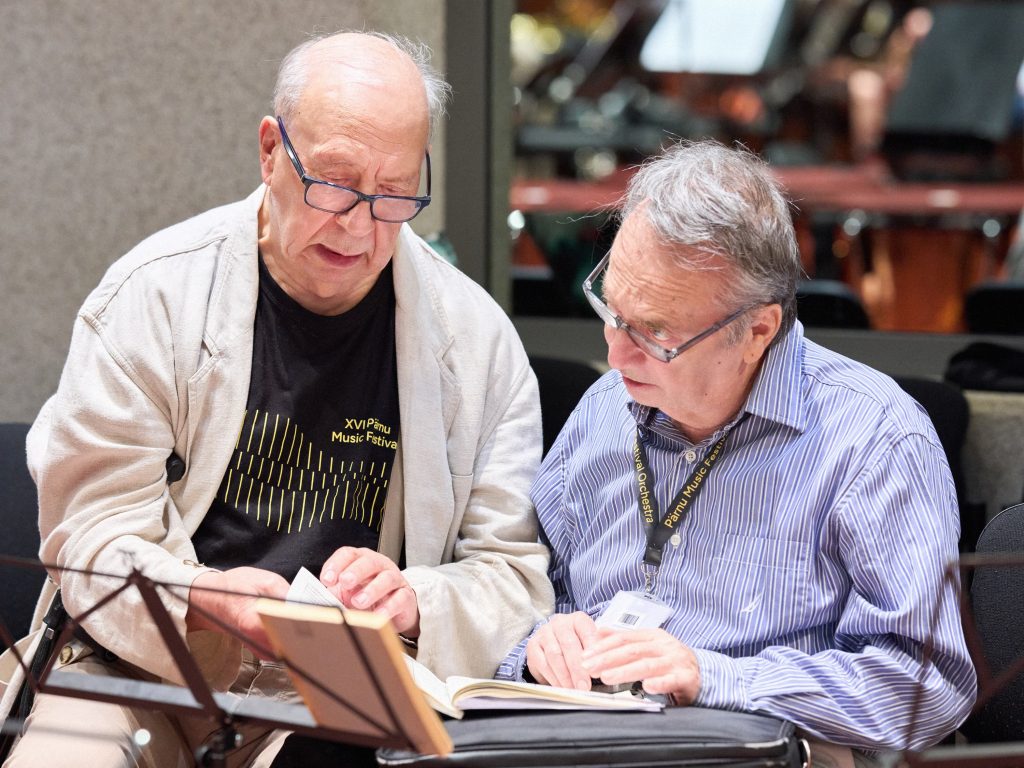
Neeme Järvi, Leonid Grin | credits: Kaupo Kikkas
It is a phenomenon I cannot fully explain, but it certainly makes one smile at young conductors who wave their arms too much and merely beat time instead of shaping musical phrases. The sentence he repeated most often was: “That is no music, only beating!” (Fortunately, he wasn’t saying it to me.)
Kristjan Järvi took a completely different approach, having chosen a different artistic path from his brother. Above all, he spoke about energy and connection with the musicians. In reality, all the mentors emphasized the same essential ideas, each in their own way.
For me, it was above all a great gift to meet these legendary conductors in person, learn from them, and make many new friendships.
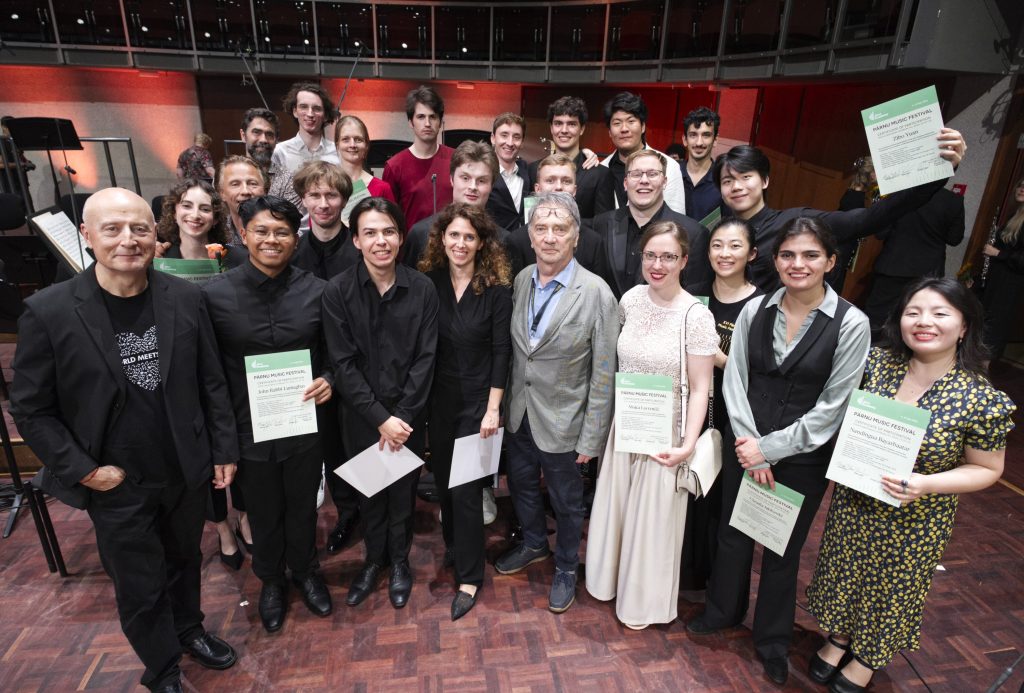
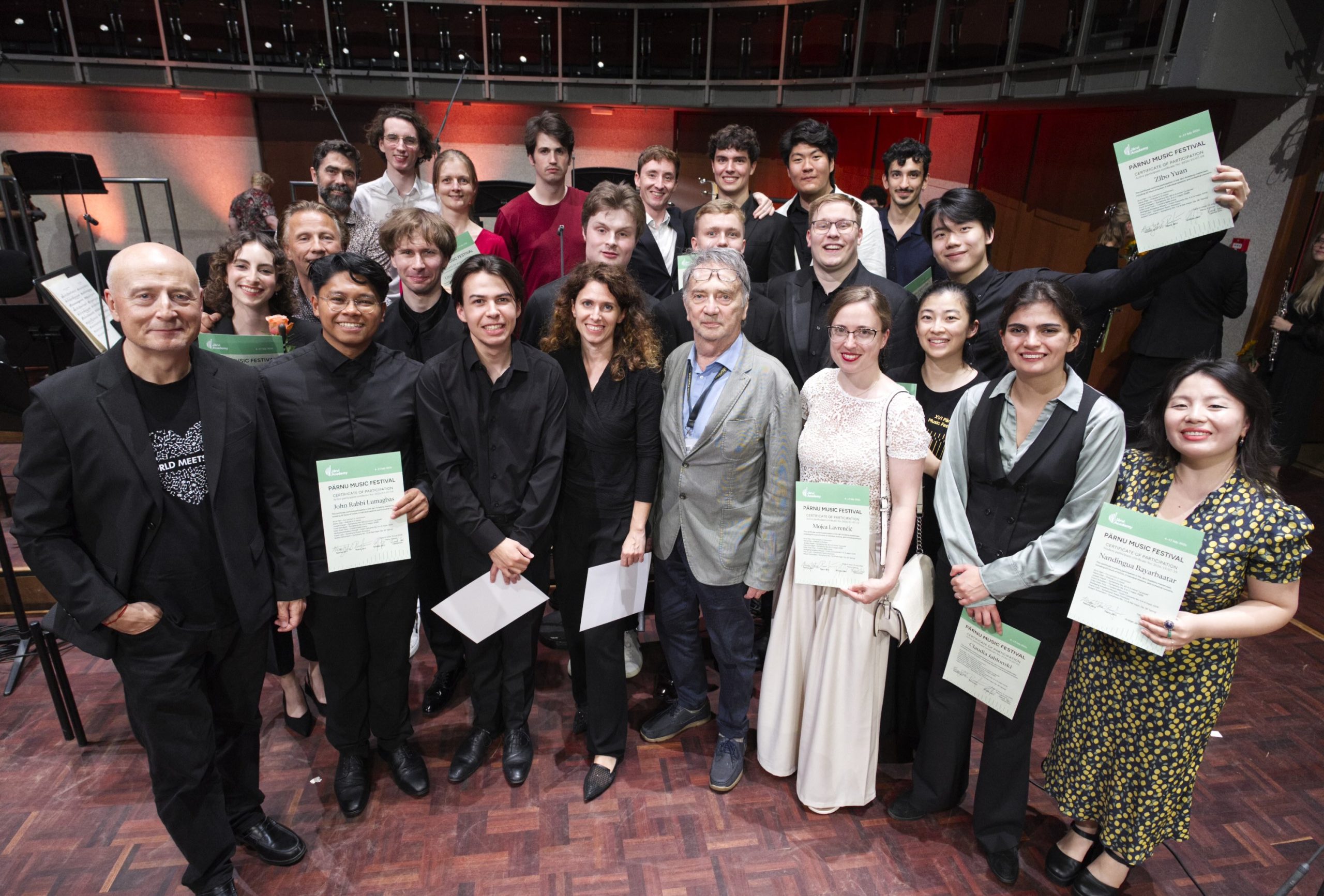
Participants and mentors of the Järvi Conducting Academy | credits: Taavi Kull
Creating new connections is also the mission of festivals like this. One could even say that, in their own way, they contribute to strengthening peace in the world. Cultures are different, and it is important to talk to one another, because understanding dispels the fears that can become the breeding ground for aggression. In much the same way, a girl from a small town who visits a big city tries to remain open to new experiences and new perspectives.